How To Search for Little Rock Property Records
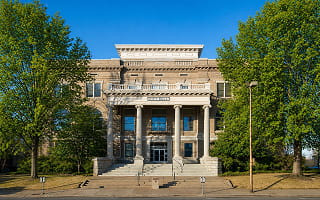
Little Rock offers a compelling blend of Southern charm and a growing professional market. However, it is essential to review property records before buying or investing in real estate in the city. These records provide a wealth of information, including ownership history, assessed values, tax obligations, zoning classifications, liens, foreclosures, and other details that you can use to do due diligence. Little Rock property records are public, which means that anyone can view them or request copies. The key is knowing where to look. We have provided a list of useful resources to help you find different types of Little Rock property records.
Pulaski County Circuit and County Clerk

The Pulaski County Circuit and County Clerk is the official custodian of deeds, mortgages, plats, liens, leases, and other related documents that record property ownership and land transactions in Little Rock. The clerk offers a Real Estate Records Lookup tool that you can use to search these records online by name, instrument type, instrument number, book and page number, and several other criteria. Note that only records from 1994 to the present are available for review online. For pre-1994 records (dating back as far as 1819), you must book an appointment to use the research computers in person at the clerk's Real Estate Department, located at Room 102, 401 West Markham Street, Little Rock, Arkansas 72201. You can also call the department at (501) 340-8433 for assistance and general inquiries.
Pulaski County Assessor

The Pulaski County Assessor is responsible for discovering, listing, and valuing all real property in Little Rock for tax purposes. The assessor's office is the primary resource for finding current assessed values, parcel maps, detailed building characteristics (such as square footage and year built), and other related property information. You can look up this information online by name, parcel number, address, parcel type, and other criteria using the office's Real Estate Search tool. The assessor also offers a dedicated mobile app (Pulaski County Assessor AR, available on both the Google Play Store and Apple App Store) for on-the-go property searches. For in-person services, you can visit the assessor's office at Suite 310, 201 S. Broadway, Little Rock, AR 72201, or call (501) 340-6170 for general inquiries and assistance.
Pulaski County Treasurer

The Pulaski County Treasurer manages property tax billing and collection for Little Rock and is the primary resource for tax-related data, including current tax statements, payment histories, and delinquency status. The treasurer's office provides a Tax Inquiry tool that you can use to look up this information online by name, address, parcel number, or taxpayer ID. You can also visit the treasurer's office at Suite 150, 201 South Broadway, Little Rock, AR 72201, for in-person services or call (501) 340-6040 for inquiries and general assistance.
Arkansas Commissioner of State Lands
While the Pulaski County Treasurer is primarily responsible for collecting property taxes in Little Rock, the Arkansas Commissioner of State Lands (through its Real Estate Division) steps in when properties become tax-delinquent. This office manages the redemption process, conducts public auctions, and distributes proceeds back to local governments. It also maintains records of tax-delinquent parcels, redemption status, and auction sales, all of which are accessible online through its Parcel Search tool. Keep in mind that this database only covers properties certified as delinquent by the county. You may visit the Commissioner of State Lands' Real Estate Division at 7003 Valley Ranch Drive, Little Rock, AR 72223, for in-person assistance or call (501) 324-9422 for general information and inquiries.
Pulaski County Circuit Courts

You can obtain property records tied to legal matters, such as foreclosure filings, boundary disputes, and civil judgments affecting title, through the Pulaski County Circuit Courts. Most of these records can be searched online by name or case number using the Arkansas Judiciary's Case Search tool. You can also visit the Pulaski County Courthouse at 401 West Markham Street, Little Rock, AR 72201, to view and request copies in person. Note that copy fees may apply. You may call (501) 340-8500 or (501) 340-8766 for additional information and general assistance.
Little Rock Property Taxes

Little Rock property taxes are used to fund essential local government services, including law enforcement, emergency services, public schools and libraries, road maintenance, hospitals, and community health programs. The Pulaski County Assessor is responsible for discovering and valuing property in the city for tax purposes, while the County Treasurer manages billing and collection. Property values are currently reassessed every four years through a county-wide reappraisal, and properties are assessed at 20% of their true market value, meaning your taxes are based on 20% of your property's appraised value.
Arkansas law limits how much a property's taxable assessed value can increase with each reappraisal. For homestead properties, the taxable value can only go up by 5% per year until it reaches the full assessed value, while for all other properties, it can only go up by 10% per year (also until the property reaches its full assessed value). However, these caps do not apply for newly constructed, discovered, or substantially improved properties.
Property tax bills are typically mailed in spring and are due upon receipt. However, taxpayers have until October 15th to pay without penalty; if October 15th falls on a weekend or legal holiday, the deadline is shifted to the next business day. Payments may be made in installments throughout the year, as long as the full balance is satisfied by the October deadline. A 10% penalty is applied immediately to any taxes not paid by October 15th (or shifted due date where applicable), plus additional administrative fees. If the taxes remain delinquent for more than two years, the property is certified and turned over to the Arkansas Commissioner of State Lands for potential tax sale to recover the debt.
The Pulaski County Treasurer offers several ways to pay Little Rock property taxes, including online, mail-in, over the phone by calling 1-833-277-8725 (you must have your parcel number for this), and in-person transactions. You can call the treasurer's office at (501) 340-6040 for more information.
![]() Assessments
Assessments

The Pulaski County Assessor's Office periodically assesses real property in Little Rock to establish each property's value for taxation purposes. A property's value is based on two key factors: its current use and its characteristics (location, age, quality of construction, improvement size, etc.). Pulaski County follows a 4-year reassessment cycle, during which the assessor's office conducts a county-wide reappraisal of all real property. The next county-wide reappraisal is scheduled for 2030. During valuations, at least one of three approaches (sales comparison, cost approach, or income approach) is applied to determine each property's "true market value".
Properties are assessed at 20% of their true market value; this figure forms the basis for the property's tax bills. State law limits how much a property's taxable value can increase after a reassessment: no more than 5% per year for homestead properties and 10% per year for other properties, until the taxable value reaches the full assessed value. For example, if your home's assessed value rises from $20,000 to $30,000 after a reassessment, its taxable value would only increase to $21,000 the first year, $22,050 the next, and so on until it reaches the full assessed value of $30,000. Note that these limits do not apply to newly discovered or constructed property or to properties that have undergone substantial improvements (defined as adding at least 25% to the square footage or value).
Assessment notices are typically mailed in the summer of a reassessment year. If you believe your property has been incorrectly valued, the first step is an informal review with the assessor's office. If a resolution is not reached, you may file a formal appeal with the Pulaski County Board of Equalization. The deadline for filing an appeal is typically the third Monday in August. You may call (501) 340-6170 for additional information and general assistance.
![]() Appraisals
Appraisals

Little Rock assessments work similarly to appraisals. They both determine the fair value of property by comparing similar properties with others in the local area that have sold recently. In cases of odd structures or new construction, the county may call upon an appraiser to help determine the value. Estate planners, courts, and lenders also use appraisals to value real property.
![]() Tax Rates
Tax Rates

Little Rock, Arkansas, has a median effective property tax rate of 1.13%, higher than both the national median of 1.02% and the Arkansas state median of 0.84%. However, the average annual tax bill in the city is $1,668, which is below the national average of $2,400.
Here's a look at how Little Rock's tax rate compares to other counties in Arkansas:
- Benton County 1.00%
- Craighead County 0.83%
- Faulkner County 0.96%
- Hempstead County 0.77%
- Izard County 0.75%
- Lonoke County 1.01%
- Miller County 0.86%
- Ouachita County 0.85%
- Pope County 0.92%
- Saline County 0.83%
- Sharp County 0.61%
- Washington County 0.60%
- Yell County 0.90%
![]() Exemptions
Exemptions

Even though property taxes in Little Rock are generally lower than the national average, some residents still have difficulties meeting their tax obligations. Fortunately, several property tax relief programs are available to eligible homeowners to help offset costs, including:
-
Homestead Tax Credit: Provides up to $600 in annual tax relief for homeowners who use their property as their principal residence.
-
Age 65 or Disabled Homeowner Property Tax Relief: Provides additional tax relief for homeowners who are aged 65+ or disabled by "freezing" the taxable assessed value of their homestead property at the level set during the next assessment after the homeowner turns 65 or becomes disabled, preventing further increases.
-
Disabled Veterans (DAV) Exemption: Grants full property tax exemptions to veterans with a 100% service-connected, permanent disability, as well as their surviving, unremarried spouses.
You can contact the Pulaski County Assessor's Office at (501) 340-6170 for questions or assistance with property tax relief programs. Inquiries may also be directed to the County Treasurer's Office at (501) 340-6040.
Little Rock Building Permits/Inspections
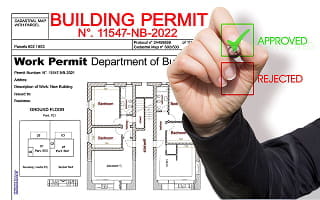
Permits are required for most construction, renovation, home improvement, and structural repair projects in Little Rock. These permits are issued by the Little Rock Planning & Development Department. Exemptions may be made for certain small-scale or minor projects, as well as cosmetic work like painting, wallpapering, tiling, and cabinetry. You can apply for permits, pay fees, and schedule inspections online through the city's Dynamic Portal (note: account registration is required for first-time users). In-person services are also available at the department's office, located at 723 West Markham Street, Little Rock, AR 72201, and you can contact its building permit desk at (501) 371-4832 or Permits@littlerock.gov for inquiries and general assistance.
Common types of permits issued in Little Rock include:
-
Building Permits: Required for new construction and structural alterations, additions, or major repairs to existing buildings.
-
Demolition Permits: Required for tearing down structures to ensure the safe utility disconnection and compliance with relevant codes and standards.
-
Electrical Permits: Required for electrical work, such as installing new wiring, upgrading service panels, or adding circuits and fixtures.
-
Mechanical Permits: Required for the installation, replacement, or significant alteration of heating, cooling, and ventilation systems (HVAC) and their associated ductwork.
-
Plumbing/Gas Permits: Required for installing or repairing water lines, sewage systems, natural gas piping, and other similar systems.
When applying for any of these permits, you must submit the proper documentation (building plans, blueprints, contractor licenses, materials lists, etc.). You must also pay the appropriate fee.
Building inspections are part of the permit process, and they ensure that the work complies with local building and safety codes. You can schedule an inspection through the online portal or in person at the office during regular business hours.
Real Estate in the City of Little Rock

Little Rock is the capital and largest city of Arkansas. Nestled along the Arkansas River, the city offers a high quality of life, supported by a diverse mix of sectors including healthcare, finance, transportation, agriculture, and retail. It is also home to several notable cultural landmarks, including the William J. Clinton Presidential Center, the Arkansas Museum of Fine Arts, the MacArthur Museum of Arkansas Military History, the historic Lassis Inn, Little Rock Central High School National Historic Site, and Pinnacle Mountain State Park.
Little Rock, Arkansas, has a population of 202,591 residents. There are 99,014 housing units in the city, with roughly 90% of these units occupied and 53% owner-occupied. The city has a diverse stock of housing options, including single-family homes, townhomes and condos, apartments, and rural properties, with housing styles like Italianate, Colonial Revival, Ranch, Craftsman, Queen Anne, Victorian, Greek Revival, Contemporary, and Colonial Revival. The average home value in Little Rock, AR, is $211,549, representing a 1.1% increase from previous years. Note that actual home values can vary across neighborhoods. Here are some examples:
- John Barrow $131,786
- Midtown $261,932
- River Mountain $375,440
- Rock Creek $345,139
- Sandpiper $224,838
- Walnut Valley $207,347
- West Markham $172,995
The Little Rock, Arkansas, real estate market is a somewhat competitive and stable market, with steady, balanced growth. Homes typically go under contract within 67 days of listing, and about 14.5% of listed properties sell above their initial asking price.
Searching across multiple government offices and databases to piece together a complete property profile can be time-consuming, but PropertyChecker simplifies the process by pulling key ownership details, tax records, transaction histories, and more into a single, easy-to-use platform. Whether you are buying, investing, or simply doing your due diligence, visit PropertyChecker.com to get the property information you need in minutes.